2026 Top Trends in Paint Protection Film for Global Buyers
As the automotive industry evolves, Paint Protection Film (PPF) has emerged as a vital solution for prolonging vehicle aesthetics. According to a recent industry report by MarketsandMarkets, the global PPF market is projected to reach $500 million by 2026, fueled by an increasing demand for vehicle maintenance and protection. In a world where consumers prioritize vehicle longevity, PPF serves not only as a protective barrier against scratches and environmental damage but also enhances resale value.
However, understanding the latest trends in Paint Protection Film is crucial for global buyers. The market is witnessing innovations in film technology, such as self-healing properties and advanced adhesives. These advancements promise greater durability and ease of application. Yet, buyers often face challenges such as misinformed purchasing decisions or insufficient product knowledge. With the industry's rapid development, staying informed is not merely advantageous; it is essential.
As we look forward to 2026, it is important to acknowledge that while PPF offers many benefits, not all films deliver equal results. Industry experts suggest evaluating manufacturer credibility and warranty terms carefully. Embracing these trends and insights can empower buyers, ensuring they make informed choices in a competitive landscape.

2026 Innovations in Paint Protection Film Technology
In 2026, advancements in paint protection film (PPF) technology will redefine vehicle preservation. Enhanced durability is key. Recent reports indicate that the global PPF market is projected to reach $1.5 billion by 2026, growing at a CAGR of 7.5%. This growth is driven by innovations that offer better self-healing properties and resistance to scratches.
Innovative films are becoming thinner yet more effective. Some new formulations are as light as 0.1 mm but provide superior protection. This allows for easier application and a less noticeable finish. A notable trend is the incorporation of nanotechnology, which enhances the film's performance against UV damage and environmental hazards. Industry experts highlight that films with advanced adhesion qualities are crucial for long-term satisfaction.
Nevertheless, with these innovations, there are challenges. The installation process may become more complex, as precise handling is required. Feedback from installers suggests that training is essential for the proper application of these new PPFs. Buyers need to be aware of potential pitfalls, such as improper techniques that can compromise the film's effectiveness. A thorough understanding of the product is vital for users seeking optimal results.
Key Market Trends Influencing Global Paint Protection Film Demand
The global paint protection film (PPF) market is experiencing significant evolution. This shift is influenced by increased vehicle customization and a growing awareness of paint preservation among consumers. More people are investing in protective solutions for their vehicles. This is driven by a combination of aesthetics and long-term vehicle value.
Sustainability is becoming a focal point. Buyers are looking for eco-friendly materials in PPF. Manufacturers are responding with greener options. However, the development of these products often lags behind consumer demands. The challenge is balancing durability with sustainable practices. This aspect needs careful consideration to avoid compromising performance.
Technological advancements are also reshaping the PPF landscape. Innovations in self-healing technology and installation techniques are gaining traction. While these innovations offer remarkable benefits, they may not be widely understood by all consumers. As awareness grows, the market will likely see increased adoption. Yet, it's crucial to educate potential buyers about maintenance and application to maximize benefits.
2026 Top Trends in Paint Protection Film
Comparative Analysis of Paint Protection Film Materials and Durability
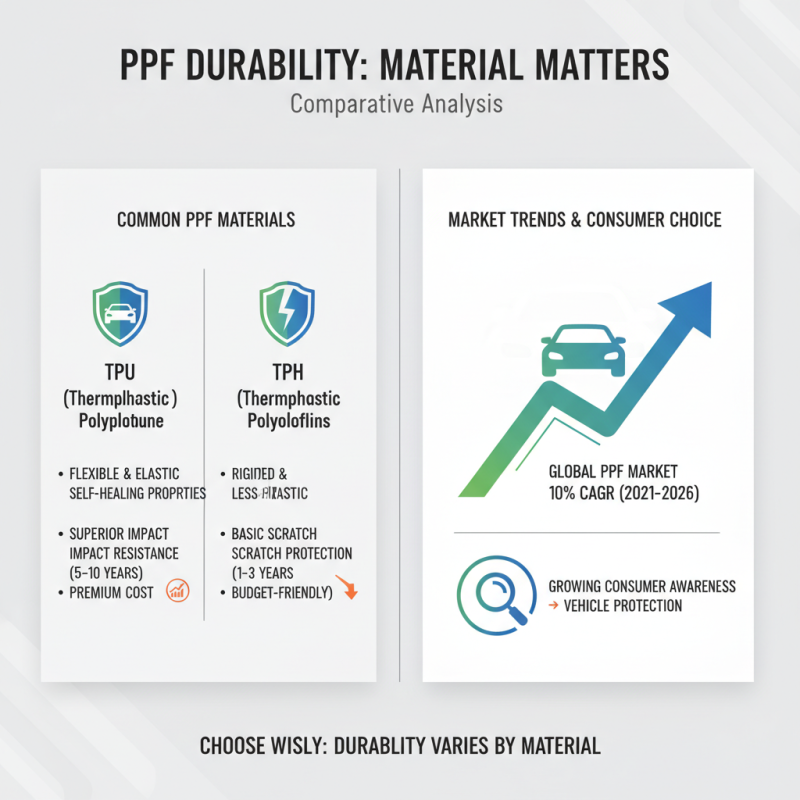
The paint protection film (PPF) market is rapidly evolving. A recent report indicates that the global PPF market is expected to grow at a CAGR of over 10% from 2021 to 2026. This growth highlights the increasing consumer awareness about vehicle protection, yet the choice of film material can significantly impact durability.
Comparing different PPF materials reveals notable differences. Polyurethane films offer excellent durability and flexibility. They can withstand abrasions and impact well. However, some users may find them challenging to install without professional assistance. Conversely, vinyl films are easier to apply and can be a cost-effective option, yet they may not resist environmental factors as effectively as polyurethane.
Tip: Always assess the installation environment. Factors like temperature and humidity can affect adhesion and longevity.
The longevity of PPF varies according to material and maintenance. Reports suggest polyurethane films can last up to 10 years with proper care, while vinyl films might need replacement in less than five years. This inconsistency can lead to debates among consumers regarding their investment in PPF.
Tip: Regularly inspect your film for signs of wear or damage. It’s crucial to address issues promptly to maintain protection.
Consumer Preferences: Choosing the Right Paint Protection Film
When selecting paint protection film (PPF), consumer preferences play a crucial role. A recent market study shows that 70% of buyers prioritize durability. Buyers often seek films that can endure scratches, chips, and UV damage. The technology behind PPF has improved significantly, allowing for better self-healing capabilities. This is an appealing feature for many customers, indicating a growing interest in long-lasting solutions.
Another factor is clarity. Over half of consumers prefer films that maintain the original appearance of their vehicles. A clear PPF allows for the beauty of the paint to shine through without distortion. However, some users report issues with yellowing over time. This concern highlights the need for ongoing industry improvements. Manufacturers must ensure clarity that withstands the test of time.
Price sensitivity also influences choices. Many consumers weigh cost against performance. According to a recent survey, 40% of buyers consider cost their top decision factor. Balancing quality and price remains a challenge in this evolving market. There is a clear desire for high-quality options at competitive prices, yet achieving this balance is complex. Understanding these preferences will guide future developments in paint protection films.
2026 Top Trends in Paint Protection Film for Global Buyers - Consumer Preferences: Choosing the Right Paint Protection Film
| Trend |
Consumer Preference (%) |
Main Feature |
Reasons for Choice |
| Self-Healing Technology |
35% |
Ability to repair scratches |
Longer lifespan and aesthetics |
| Easier Installation |
28% |
User-friendly application |
DIY options & cost-saving |
| Hydrophobic Properties |
22% |
Repels water and dirt |
Less frequent cleaning |
| Customizable Design |
15% |
Variety of colors and finishes |
Personalization of vehicle |
Future Outlook: The Evolving Landscape of Paint Protection Film Industry
The paint protection film (PPF) industry is undergoing significant changes. Analysts predict a compound annual growth rate (CAGR) of around 10% through 2026. This growth reflects the rising awareness among consumers about vehicle care. More buyers are looking for long-lasting protection against scratches and UV damage. As a result, the demand for advanced PPF technologies is on the rise.
New materials are entering the market. Enhanced durability and self-healing properties are key features attracting buyers. Current trends focus on lighter and more flexible films, which improve aesthetics without adding weight. However, not all films meet these evolving standards. Some products fall short in real-world applications, highlighting the need for thorough research before purchase.
Market data indicates an increasing preference for eco-friendly options. Consumers are becoming more conscious of sustainability. Reports suggest that around 30% of buyers consider environmental impact in their decisions. However, the industry still faces challenges with transparency regarding eco-certifications. As the landscape evolves, balancing innovation with reliability will be critical for long-term success in the paint protection film sector.