2025 How to Choose the Best Car Window Tint for Your Vehicle
In 2025, choosing the best car window tint is more critical than ever as vehicle owners prioritize both aesthetics and functionality. According to a recent report by the Window Film Association, the demand for high-quality car window tint has surged, with a projected market growth rate of 6% annually. This increase is driven by heightened consumer awareness regarding UV protection, glare reduction, and interior temperature control. As noted by industry expert Dr. Michael Weston, "Selecting the right car window tint can significantly enhance comfort and safety while driving, as well as protect vehicle interiors from sun damage."
Furthermore, the advancements in tint technology mean that vehicle owners now have a plethora of options tailored to different needs. High-performance films not only block harmful UV rays but also come with varying levels of darkness and reflectivity, making it essential for consumers to understand what each option offers. An informed decision regarding car window tint can lead to a more enjoyable driving experience and improved vehicle longevity, ultimately marrying style with practical value. As Dr. Weston concludes, "Understanding the features and benefits of car window tint is key to delivering both quality and personal preference for every car owner.
Understanding Car Window Tinting: Materials and Types Explained
Car window tinting has become an essential aspect of vehicle customization and functionality, offering benefits such as heat reduction, UV protection, and privacy. Understanding the various materials and types available can be crucial in selecting the best tint for your vehicle. The primary materials used for window tints include dyed, metalized, ceramic, and hybrid films. Dyed films provide a basic level of privacy and aesthetic appeal but are less effective in heat rejection compared to other types. Metalized films contain tiny metallic particles that reflect heat, enhancing durability and providing glare reduction, making them popular choices among consumers.
Ceramic window films represent the pinnacle of technology in car tinting, providing superior heat rejection without compromising visibility and aesthetics. According to a report by the International Window Film Association, ceramic films can block up to 99% of harmful UV rays and significantly reduce solar heat gain, making them an ideal solution for hot climates. Hybrid films combine elements of both dyed and metalized options, offering a balanced approach for those seeking a blend of affordable pricing and performance. Assessing the level of protection, privacy, and appearance is vital when choosing the best tint for any specific vehicle, ensuring that drivers can enjoy both comfort and style on the road.
Evaluating UV Protection: The Importance of UV Filtering in Window Tints
When selecting window tint for your vehicle, one of the most critical factors to consider is UV protection. Ultraviolet (UV) radiation from the sun can cause significant damage to both your skin and your car's interior. According to the The Skin Cancer Foundation, about 90% of nonmelanoma skin cancers and 86% of melanoma cases are associated with UV exposure from the sun. This highlights the need for effective UV filtering in window tints to help mitigate such risks while driving.
Most high-quality window tints can block up to 99% of harmful UV rays, greatly reducing your exposure and helping to maintain the integrity of your vehicle's upholstery. A report by the International Window Film Association (IWFA) emphasizes that not only does UV radiation contribute to skin cancer, but it can also lead to fading and deterioration of your car's interior materials, including leather and fabric.
By choosing window tints with strong UV filtering properties, you not only protect yourself but also extend the lifespan of your vehicle’s interior. As more vehicle owners become aware of the health risks associated with UV exposure, the demand for effective UV-blocking window tints continues to grow, making it an important consideration for any car owner in 2025 and beyond.
Legal Regulations: Navigating Tinting Laws in Your Area for Compliance
When selecting the best car window tint for your vehicle, it's essential to consider not just personal preferences for aesthetics or heat rejection, but also the legal regulations governing window tinting in your area. As reports from the International Window Film Association indicate, regulations can vary significantly by state, often influenced by factors such as safety, visibility, and state-specific climate concerns. For instance, many states impose strict limits on the percentage of visible light transmission (VLT) allowed for front side windows, typically ranging from 25% to 35%.
Understanding these regulations is crucial for compliance and can prevent costly fines or the need for costly modifications. A comprehensive survey by the American Automobile Association suggests that 33% of drivers are unaware of the specific tinting laws in their jurisdiction, which highlights the importance of research before applying window films. Additionally, many states also differentiate between front and rear window tints, emphasizing the need for vehicle owners to familiarize themselves with local laws to ensure both safety and legality. Navigating these legal waters requires diligence but is essential in making an informed decision about window tinting that enhances both comfort and compliance.
2025 How to Choose the Best Car Window Tint for Your Vehicle - Legal Regulations
| Tint Type |
Visible Light Transmission (VLT) % |
UV Protection (%) |
Heat Rejection (%) |
Legal Limit (Local) |
| Dyed Film |
5 - 50% |
99% |
45% |
35% |
| Metalized Film |
10 - 35% |
99% |
50% |
30% |
| Ceramic Film |
5 - 50% |
99% |
70% |
35% |
| Hybrid Film |
5 - 40% |
99% |
60% |
25% |
| Clear Film (Protection) |
70 - 90% |
99% |
30% |
N/A |
Measuring Heat Rejection: How to Assess Tint Performance Statistics
When selecting the best car window tint for your vehicle, understanding heat rejection performance statistics is crucial. Heat rejection is typically measured in terms of solar heat gain coefficient (SHGC) and total solar energy rejected (TSER). The SHGC indicates how much solar radiation passes through the window, with lower values representing better performance.
According to the International Window Film Association, effective tints can achieve SHGC values as low as 0.35, significantly reducing heat within the vehicle on hot days.
Additionally, assessing the TSER can provide insight into a tint's capacity to reject solar heat. High-quality window films can reject over 99% of harmful UV rays and up to 85% of solar heat, which not only enhances comfort but also prolongs the life of the vehicle's interior.
The Window Film Association reports that a good tint can lower cabin temperatures by up to 30°F compared to untinted windows, making it an essential consideration in areas with extreme weather conditions. These statistics serve as a guide for vehicle owners to choose a tint that effectively balances privacy, protection, and energy efficiency.
Cost vs. Quality: Analyzing the Price Range of Window Tint Products
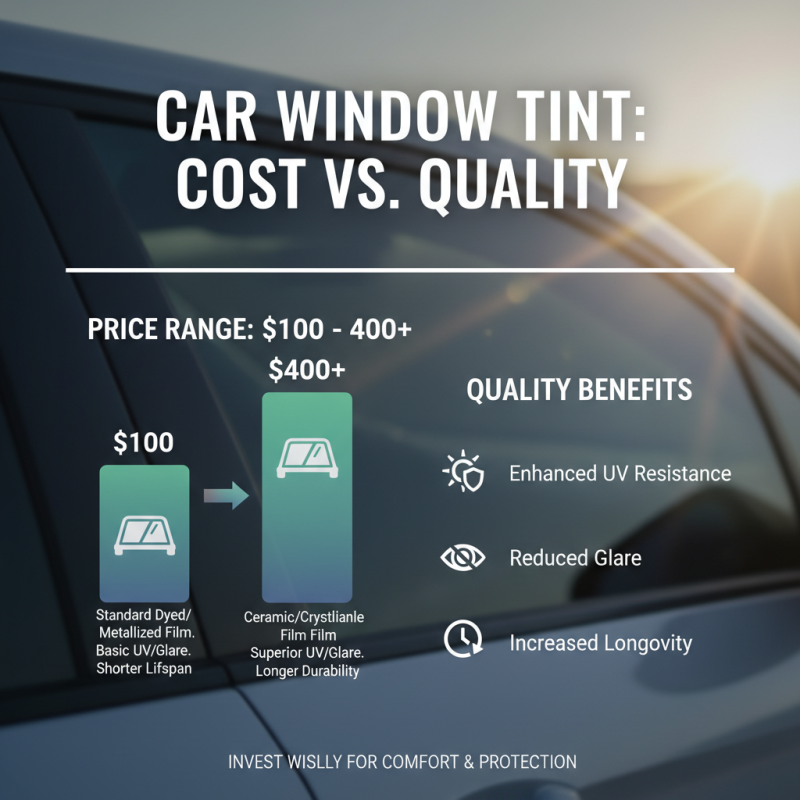
When selecting the best car window tint for your vehicle, understanding the correlation between cost and quality is essential. The market for window tinting offers a wide range of products, with prices typically ranging from $100 to $400 for installation, depending on the type and quality of film used. According to industry reports, higher-end films often feature advanced materials that provide better UV resistance, glare reduction, and longevity, making them a worthwhile investment in the long run. For instance, ceramics and crystalline films, while more expensive, can offer superior performance and durability compared to standard dyed or metalized films.
Tips: Prioritize your needs by identifying which features matter most to you—be it heat rejection, UV protection, or aesthetics. Conduct thorough research on the various types of tints available, as some products may have VLT (Visible Light Transmission) ratings that affect visibility it offers while maintaining privacy.
Moreover, professional installation is a crucial aspect that can significantly impact the overall effectiveness of the tint. Though DIY kits are available at lower prices, they may not provide the clarity or finish achieved by professionals. Reliable studies show that poorly installed tints can deteriorate much faster, leading to eventual replacement and increased costs. Choosing the right service provider who understands local regulations and offers a warranty for their work can save you money and ensure you enjoy the benefits of quality window tinting for years to come.