Car Window Tint Tips for Better Heat Protection and Privacy?
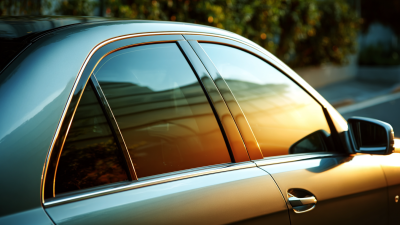
Car Window Tint offers more than just a sleek appearance. It provides crucial benefits such as heat protection and enhanced privacy. Many car owners appreciate these features, yet proper application and selection can be challenging.
Choosing the right Car Window Tint requires understanding different options available. Each type has varied heat-blocking properties and darkness levels. Some films can reject up to 99% of harmful UV rays. However, not all products are created equal. It’s essential to research reputable brands and consult professionals when applying tint.
While Car Window Tint can significantly improve driving comfort, installation mistakes can diminish its effectiveness. Bubbles, wrinkles, and misalignment are common issues. These errors can lead to reduced privacy and increased heat. Moreover, local regulations may restrict certain tint levels. Understanding these factors can help you achieve the best results.
Understanding the Benefits of Car Window Tinting for Heat Protection
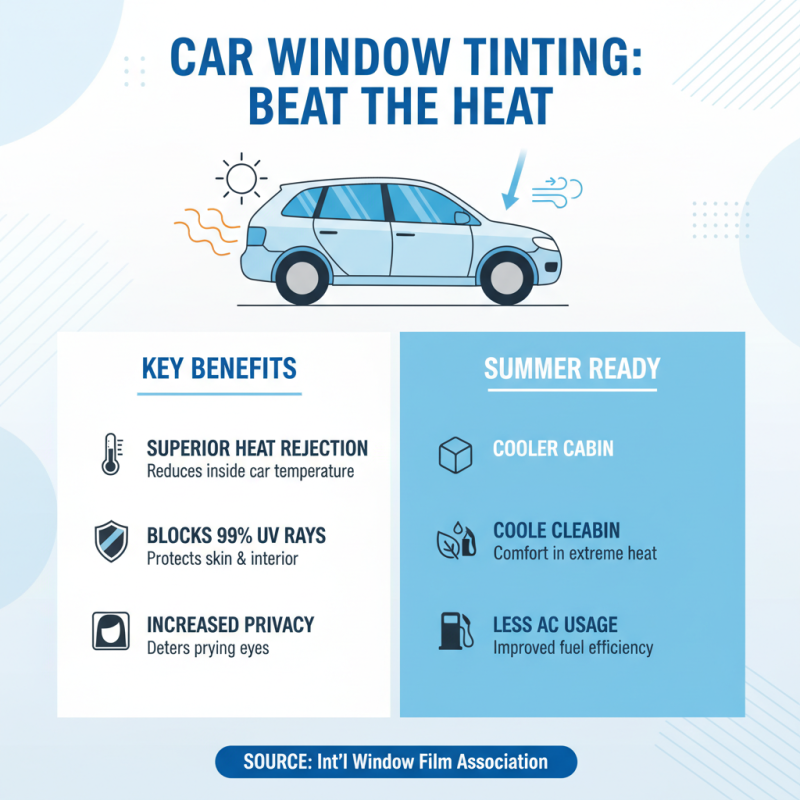
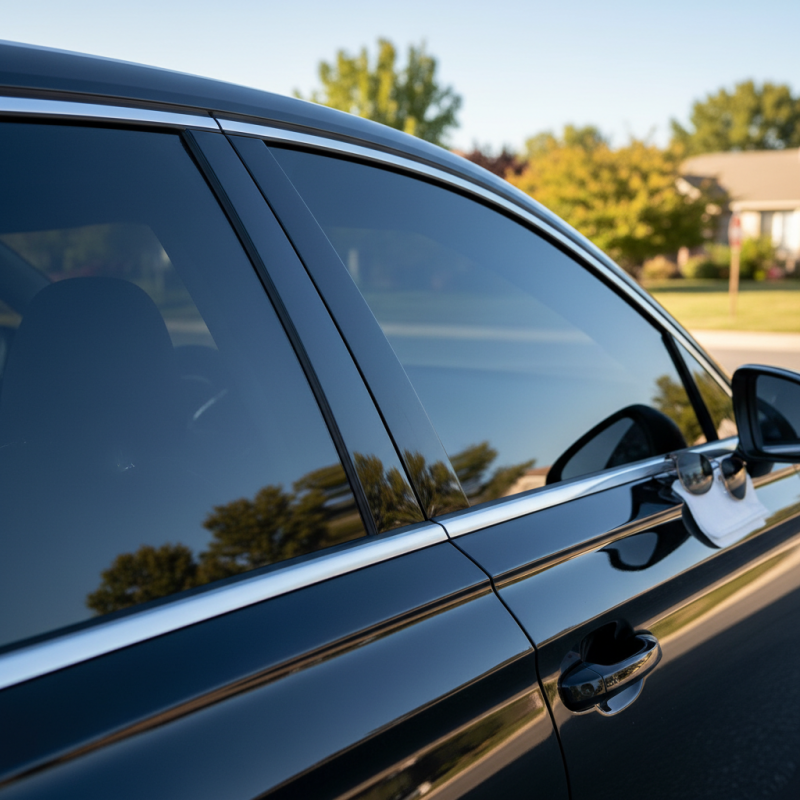
Car window tinting is more than just an aesthetic choice; it offers significant benefits for heat protection and privacy. According to a report from the International Window Film Association, properly tinted windows can block up to 99% of harmful UV rays and reduce heat buildup. This feature is especially useful during hot summer months, where inside car temperatures can rise drastically.
To maximize these benefits, choose a film that is specifically designed for heat rejection. Look for options with high total solar energy rejection (TSER) ratings. This can make a noticeable difference in how cool your vehicle feels. Additionally, consider the level of visible light transmission (VLT) that suits your privacy needs while complying with local regulations.
When tinting your car windows, ensure the installation is done professionally. Improperly applied tint can bubble or peel, detracting from your vehicle's appearance. Regular maintenance of tinted windows is also crucial. Clean them with suitable products to prevent damage and ensure longevity. Proper care not only enhances your car's look but helps maintain its heat protection capabilities.
Choosing the Right Window Tint Film for Maximum Heat Resistance
When selecting window tint films, consider heat resistance as a priority. Reports from the Skin Cancer Foundation indicate that a high-quality tint can block up to 99% of harmful UV rays. This significant reduction helps protect your skin and lowers interior temperatures. For those living in sunnier climates, this feature can lead to increased comfort, reducing the need for air conditioning usage.
Choose materials rated for high heat absorption. Dyed and ceramic films often provide better heat rejection. According to the International Window Film Association, ceramic films can reduce heat by as much as 60%. This level of heat management can improve energy efficiency in vehicles.
Ensure your choice also complies with local regulations, as some installations may have restrictions.
In addition to heat resistance, consider privacy needs. Tints come in various shades, impacting visibility and security. Professional installers recommend a balance—too dark may affect nighttime visibility. A contradiction exists; maximum heat protection might sometimes compromise natural light. Choosing the right film involves evaluating personal preferences and regional guidelines, leading to a more informed decision.
Legal Considerations for Window Tinting in Different States
When considering window tinting, legal aspects vary significantly across different states. Before applying any tint, check local laws regarding allowable darkness levels. Some states impose strict regulations. For instance, in California, front windows must allow a specific percentage of light to pass through. Violations can lead to fines and ticketing.
Privacy and heat protection are essential benefits of window tinting. However, non-compliance might negate these advantages. Some states may require a certification sticker on tinted windows. This ensures the film meets legal standards. Without it, even the best-tinted windows could face legal challenges.
Installation is another crucial point. It's advisable to work with certified professionals who understand local laws. While DIY options exist, they can lead to mistakes that result in legal complications. Reflect on your choices to ensure that you balance proper heat protection and adherence to the law effectively.
Car Window Tint Tips for Better Heat Protection and Privacy
| State |
Visible Light Transmission (%) |
Reflection (%) |
UV Protection |
Legal Status |
| California |
70% |
Only for rear windows |
99% |
Legal |
| Texas |
25% (front), 20% (back) |
25% |
99% |
Legal |
| Florida |
15% (front), 20% (back) |
33% |
99% |
Legal |
| New York |
70% |
No restrictions |
99% |
Legal |
| Illinois |
35% (front), 5% (back) |
No restrictions |
99% |
Legal |
Installation Tips for Achieving Optimal Privacy and Performance
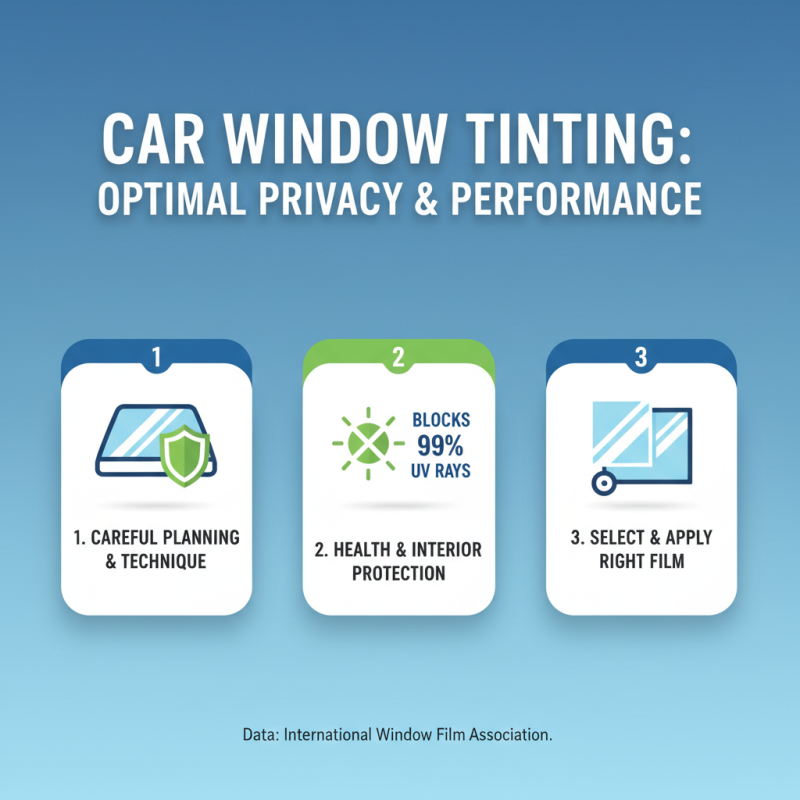
When it comes to car window tinting, achieving optimal privacy and performance requires careful planning and accurate installation techniques. Data from the International Window Film Association indicates that effective window tint can block up to 99% of harmful UV rays. This not only protects the interior of your car but also contributes to occupant health. Selecting the right type of film and ensuring proper application are crucial aspects of the installation process.
Installation begins with thorough cleaning of the windows to remove dust and grease. Professionals recommend using a specific cleaning solution to ensure a smooth application. It's essential to measure and cut the film accurately. A poorly cut film may lead to air bubbles, diminishing its performance. After installation, allowing the film to cure before rolling down windows enhances adhesion. However, indirect sunlight can pose challenges during installation. Technical precision is vital here.
Furthermore, while tinted windows provide significant privacy, over-tinting can affect visibility and safety. Many states have laws regulating tint darkness, so verifying local regulations is necessary. Monitoring the tint’s condition is also important. Peeling or bubbling can not only reduce effectiveness but also create safety hazards. Regular checks can help maintain both aesthetics and function. Understanding these dynamics ensures that you maximize the benefits of window tinting while maintaining safety on the road.
Maintaining Your Tinted Windows for Longevity and Effectiveness
Maintaining tinted windows is essential for maximizing their benefits. Regular cleaning is vital to retain clarity. Use a soft microfiber cloth and a gentle, ammonia-free cleaner. Harmful chemicals can damage the tint and hinder its effectiveness. Studies suggest that improper care can reduce window lifespan by up to 30%.
Sun exposure can degrade window film over time. It’s crucial to park in shaded areas whenever possible. This simple practice can protect the tint from excessive UV damage. Reports indicate that excessive sunlight can cause peeling and fading, which splits almost 20% of new tints in their first year.
Inspecting your windows regularly is also recommended. Look for bubbles or discoloration, as these are early signs of issues. Addressing problems early can prolong tint life. The industry notes that around 15% of window tint failures occur due to neglect in maintenance. Keeping up with care may require time, but it is worth it for the privacy and heat protection you gain in return.
Car Window Tint Heat Protection and Privacy Levels